Introduction to AI Filmmaking
Cohort 1, Session 1 — taught by Austin Zartman, creator of the AI short-film series ASHES.
To make a film with AI, you follow a process from concept to final production. It begins with developing a story through loglines, character sheets, and scripts tailored for a specific format, like vertical video. Next, you use generative AI tools for storyboarding and image creation. The final step involves assembling the AI-generated assets, adding sound design, and editing the final piece.
What you will learn
- Understand the basics of AI filmmaking and its potential.
- Learn about the different stages of creating a vertical series with AI.
- Gain insights into the current landscape of vertical storytelling.
- Develop a concept for a short series and write the first episode.
- Familiarize with the tools and resources available for AI filmmaking.
Creating an AI-Generated Video
This workflow outlines the complete process for producing a short video using AI tools, starting with the initial concept and moving through scripting, asset generation, and final editing to create a finished product.
Step 1. Develop a concept for your story, including the plot, characters, and visual style.
Step 2. Write a screenplay for your story, using a standard format to estimate the length of each episode.
Step 3. Create a storyboard by generating images for each shot in your script using an AI image generator.
Step 4. Generate video clips from your storyboard images using an AI video generation tool.
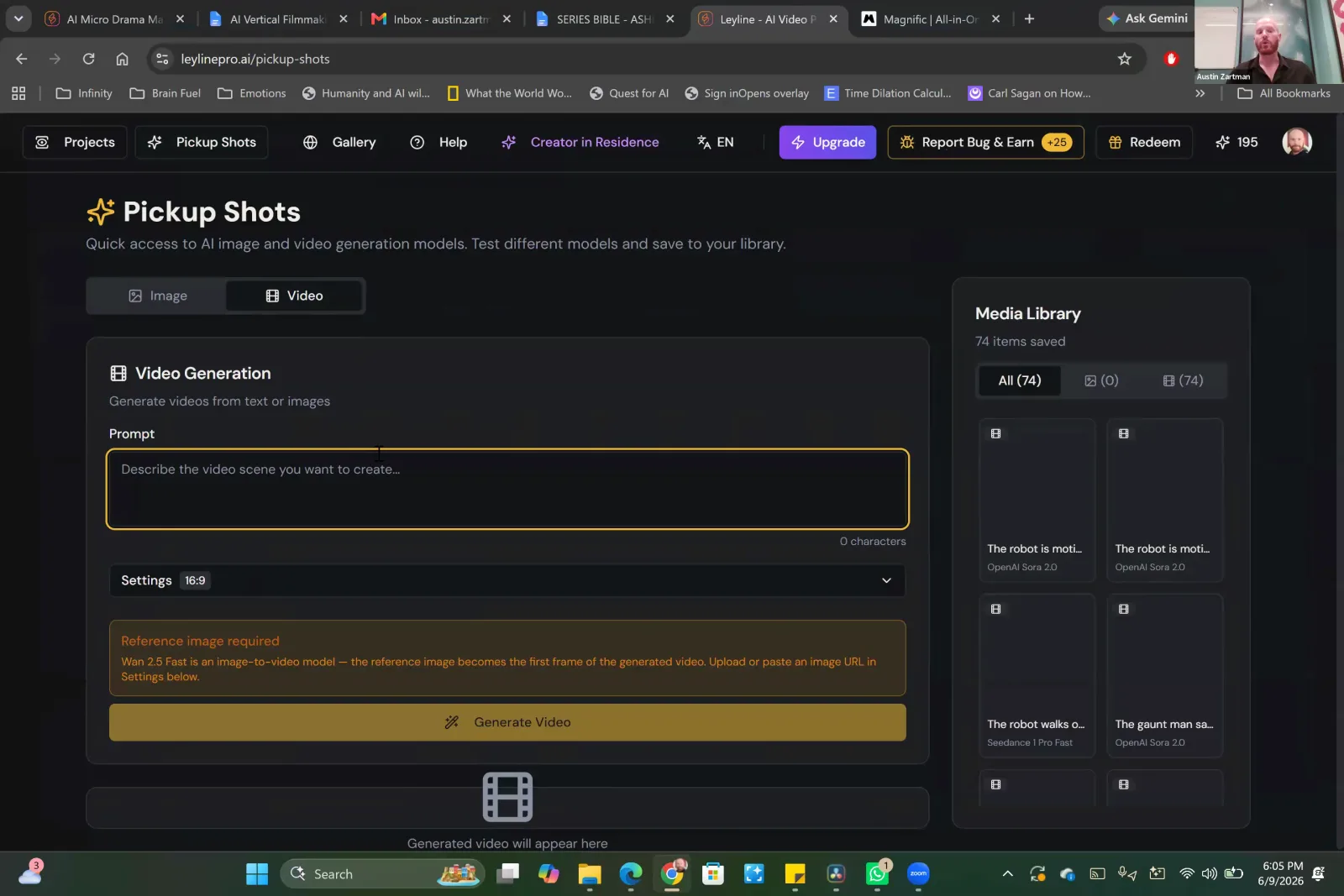
Use an AI video generation tool to create video clips by providing a text prompt and a reference image from your storyboard.
Step 5. Edit the video clips together, adding transitions, sound effects, and music to create the final video.
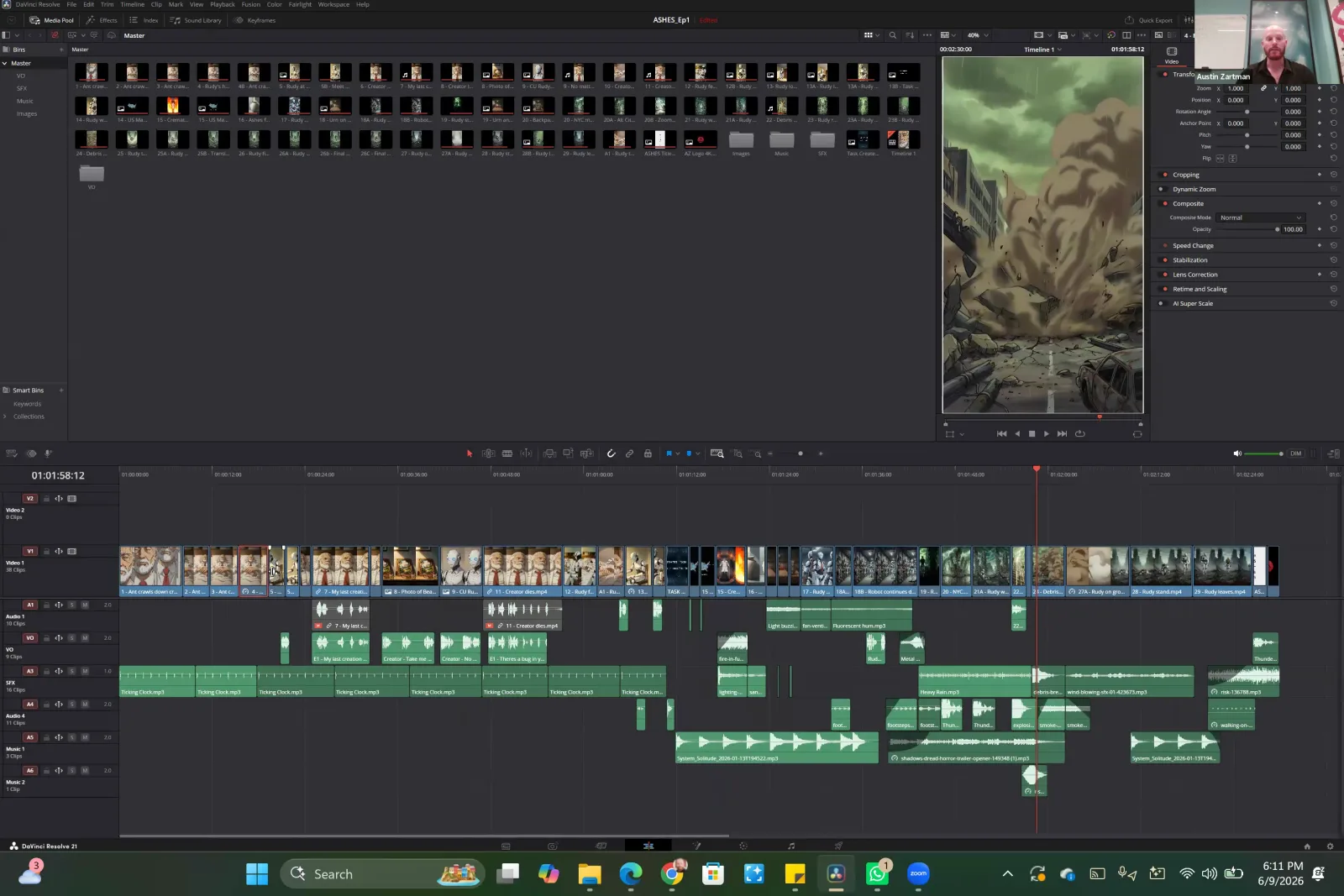
Assemble the video clips on the timeline, layering in sound effects, music, and voiceover to build the final edit.
Step 6. Export the final video in a suitable format for sharing on platforms like YouTube or TikTok.
Key terms
Vertical Storytelling. A format of storytelling optimized for vertical screens, such as smartphones, characterized by short, engaging episodes with hooks and cliffhangers.
AI Filmmaking. The process of using artificial intelligence tools to create films, from scriptwriting to video generation.
Generative AI. A type of artificial intelligence that can create new content, such as text, images, or videos, based on the data it has been trained on.
Prompting. The process of providing a text-based instruction to an AI model to generate a specific output, such as an image or a piece of text.
Storyboarding. A sequence of drawings or images, typically with some directions and dialogue, representing the shots planned for a film or television production.
Character Sheet. A document that details the physical and personality traits of a character, used as a reference for consistency in storytelling and visual representation.
Logline. A brief summary of a television program, film, or book that states the central conflict of the story, often providing both a synopsis of the story's plot, and an emotional 'hook' to stimulate interest.
Hook. A compelling element at the beginning of a story or episode designed to grab the audience's attention and make them want to continue watching.
Cliffhanger. An ending to an episode or chapter that leaves the audience in suspense, eager to see what happens next.
AI-powered tools. Software and applications that leverage artificial intelligence to perform tasks such as generating images, videos, or text.
Common mistakes to avoid
- Not paying enough attention to the first five seconds of the video, which is crucial for grabbing the viewer's attention.
- Creating a story that is too complex or has too many characters for the short format of vertical videos.
- Neglecting the importance of sound design, which can significantly impact the viewer's experience.
- Underestimating the time and effort required for the image generation phase, which can be the most time-consuming part of the process.
- Not having a clear understanding of the target audience and the platform where the content will be published.
- Failing to create a strong hook and cliffhanger in each episode to keep viewers engaged and coming back for more.
- Overlooking the importance of creating a consistent visual style throughout the series.
- Not utilizing the full potential of AI tools by not experimenting with different prompts and settings.
- Ignoring the legal aspects of using AI-generated content, such as copyright and intellectual property rights.
- Trying to do everything alone instead of collaborating with others who have different skills and expertise.
Frequently asked questions
How to create a short film using AI tools?
The process starts with concept development, including a logline and character sheets. You then write a script and use AI tools for storyboarding and image generation. Finally, you assemble these assets, add sound design, and edit them into your final film, ensuring it fits the intended platform's format.
The importance of a strong hook in short-form video content?
A strong hook is critical in short-form video because the first five seconds determine viewer retention. It must grab attention immediately to prevent users from scrolling away. Neglecting the hook is a common mistake that significantly reduces engagement and viewership for an entire series on vertical platforms.
How to write a script for a vertical video series?
When scripting a vertical series, focus on a simple story with few characters suitable for the short format. Each episode's script must feature a strong hook to capture immediate attention and a compelling cliffhanger. This structure encourages viewers to return for the next installment and stay engaged with the series.
What are the challenges of AI in creative storytelling?
Key challenges in AI filmmaking include the time-consuming nature of image generation and maintaining a consistent visual style. Creators must also navigate the legal aspects of AI content, like copyright. Additionally, it is important to avoid overly complex stories that are unsuitable for the short-form video format.
In the instructor’s words
“The first five seconds of your show, no matter what show you're telling, is probably the most important part because you are fighting that attention from the audience.”
“In verticals, each episode, I would say there's probably three elements, right? There's a hook, there's a turn, and there's a cliff.”
“I was going for a different goal with my project, which is that I wanted to do a sci-fi thriller and essentially build my own IP that I could later develop my own AI film.”
This tutorial was produced from the Leyline Masterclass recording (Cohort 1, Session 1, 2026-06-09). Screenshots are captured directly from the session.