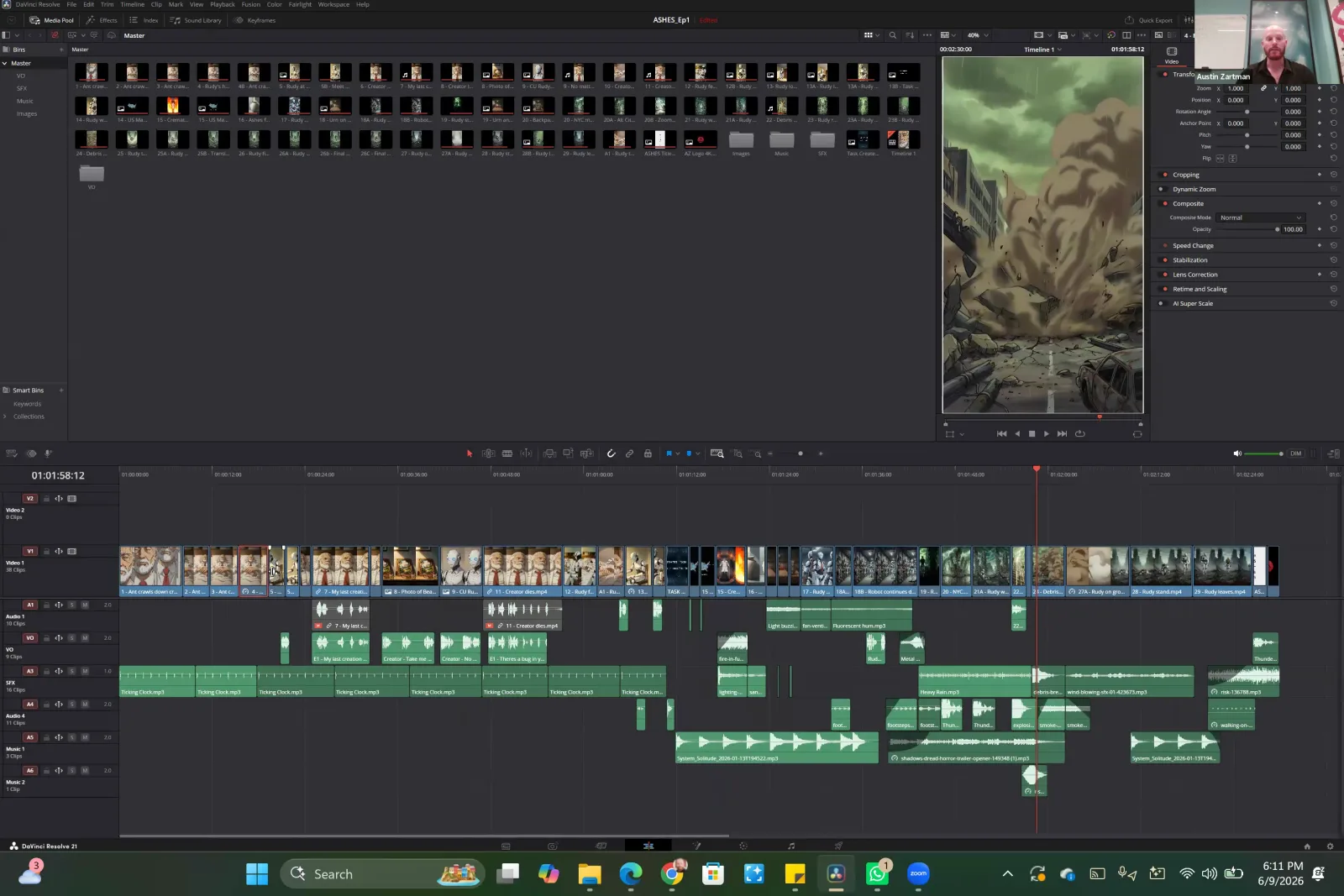
Vertical storytelling is a filmmaking format where a complete, feature-length narrative is broken down into a series of short, mobile-first episodes. Unlike traditional television or film, this format is designed for consumption on phones, often in short bursts of time. The structure of both the overall story and the individual episodes is specifically adapted to hold the attention of a mobile audience. The format has gained significant traction, with AI filmmaker Austin Zartman noting its immense popularity in China, where an estimated 100 million people watch vertical stories.
What is the basic format of a vertical story?
Vertical storytelling consists of a complete, feature-length narrative told through a series of short, bite-sized episodes. AI filmmaker and creator of ASHES, Austin Zartman, explains that each episode is typically around a minute and a half, functioning like a single scene or even just part of one. While each episode is short, the full story arc is comparable to a feature film, with a clear beginning, middle, and end. The total runtime for a complete vertical story averages around 75 minutes, though it can range from 60 to 90 minutes.
This format is often structured into "cycles." A typical cycle consists of about 10 episodes. In many distribution models, this first cycle is offered for free to get viewers invested in the characters and plot. After the tenth episode, viewers will often hit a paywall to unlock the rest of the story. This model depends on the strength of the early episodes to build enough momentum and intrigue to convert a free viewer into a paying customer.
How does an episode of a vertical story begin?
An episode of a vertical story intentionally begins without any setup, dropping the audience directly into the middle of the action. According to Austin Zartman, there is no time to set the scene or introduce characters in the traditional sense, especially in the first episode. The story must start immediately to capture attention on a mobile platform where users can easily scroll away.
Zartman provides a clear example: if a scene involves an argument between two characters, the episode should not start with them meeting or talking calmly. Instead, it should open in the middle of the argument. "Who who who we are, what we're arguing about, we don't know," he explains. "You got to stay to find out." This technique creates an immediate question in the viewer's mind, forcing them to remain engaged to understand the context and what happens next.
What are the key structural elements of each episode?
Each individual episode in a vertical story is built around three core structural elements: a hook, a turn, and a cliff. This formula is designed to grab the viewer's attention immediately, introduce a meaningful narrative shift within the short runtime, and end in a way that compels them to watch the next episode.
- The Hook: This is the opening of the episode. As mentioned, it drops the viewer directly into a moment of high tension or action without prior context. The goal is to make the viewer ask questions instantly.
- The Turn: In the middle of the episode, a "turn" occurs. This is a twist, a reveal, or a shift in the dynamic of the scene. It changes the direction of the narrative and provides a small piece of the larger puzzle, rewarding the viewer for their attention.
- The Cliff: The episode ends on a "cliff," or cliffhanger. This is a moment of unresolved tension that leaves the viewer needing to know what happens next. This is especially critical for episodes leading up to a paywall, as it is the primary driver for converting viewers.
How does the viewing context influence vertical storytelling?
The viewing context fundamentally shapes vertical storytelling, as it is designed for mobile consumption in various environments, not a dark theater. This requires different production choices, particularly with lighting and editing. Austin Zartman notes that unlike traditional films which can be dark and cinematic, vertical stories must be visually bright. This is because people are often watching on their phones during the day—"in the bathrooms, in the, you know, while we're sitting in the car, waiting in line."
This mobile-first context is the "opposite of the movie theater." The lighting must be clear enough to be seen on a reflective phone screen in a bright environment. The editing pace is also typically faster to hold attention. Understanding where, how, and why the audience is watching informs every creative decision, from the script's pacing to the final color grade. The entire production pipeline is optimized for a small screen held in the hand, not a large screen in a dedicated viewing space.
Why is the vertical storytelling format so short?
The vertical storytelling format uses short episodes, often between three and ten minutes, to cater to modern mobile viewing habits and short attention spans. The format's success is built on the reality that many people no longer have or make time to sit down for a continuous 45-minute television episode. Instead, they consume content in the small gaps of their day.
This model provides a complete and satisfying narrative experience, but in small, easily digestible increments. Its popularity in China, with 100 million viewers, demonstrates a massive audience for this kind of content. As Zartman's collaborator stated, "You have three minutes, 10 minutes, it's good enough for you to relax." This convenience and accessibility are what position vertical storytelling as a significant format for the future of narrative entertainment.
Frequently asked questions
What is the total length of a vertical story?
A full vertical story is comparable to a feature film, typically running between 60 and 90 minutes. AI filmmaker Austin Zartman notes that the current sweet spot for a complete narrative is around 75 minutes, delivered across many short episodes.
What are the three parts of a vertical episode?
Each episode in a vertical story contains three essential parts: a hook that drops the viewer into the action, a turn that shifts the narrative, and a cliff (cliffhanger) that creates a compelling reason to watch the next episode.
Do you need to set up the story in the first episode?
No. Vertical storytelling deliberately avoids traditional setup in the first episode. To capture immediate attention on mobile devices, the audience is dropped directly into a moment of high tension or intrigue without any initial context.
How are vertical stories monetized?
A common monetization model is to offer a "cycle" of the first 10 episodes for free. After the viewer is invested in the story and characters, they hit a paywall and must pay to continue watching the rest of the season.
Why is bright lighting important for vertical stories?
Bright lighting is crucial because vertical stories are consumed on mobile phones in various environments, many of which are well-lit. Unlike a dark movie theater, viewers may be outside or in a bright room, so the visuals must be clear and visible on a reflective screen.
Keep learning
This guide is part of the Introduction to AI Filmmaking masterclass lesson.
Related guides:
Comments
Sign in with your Leyline account to join the conversation.