AI filmmaking is a method of film production that uses artificial intelligence to generate or manipulate visual and audio assets. This process combines the generative power of AI models with the narrative and technical skills of traditional filmmaking. It is not a fully automated system but rather a hybrid workflow where a human creator directs AI tools to produce raw materials—such as video clips and images—and then assembles, refines, and enhances these materials using standard post-production software and techniques. The core of the process involves generating assets, layering sound, and editing everything into a cohesive story.
What is the core principle of AI filmmaking?
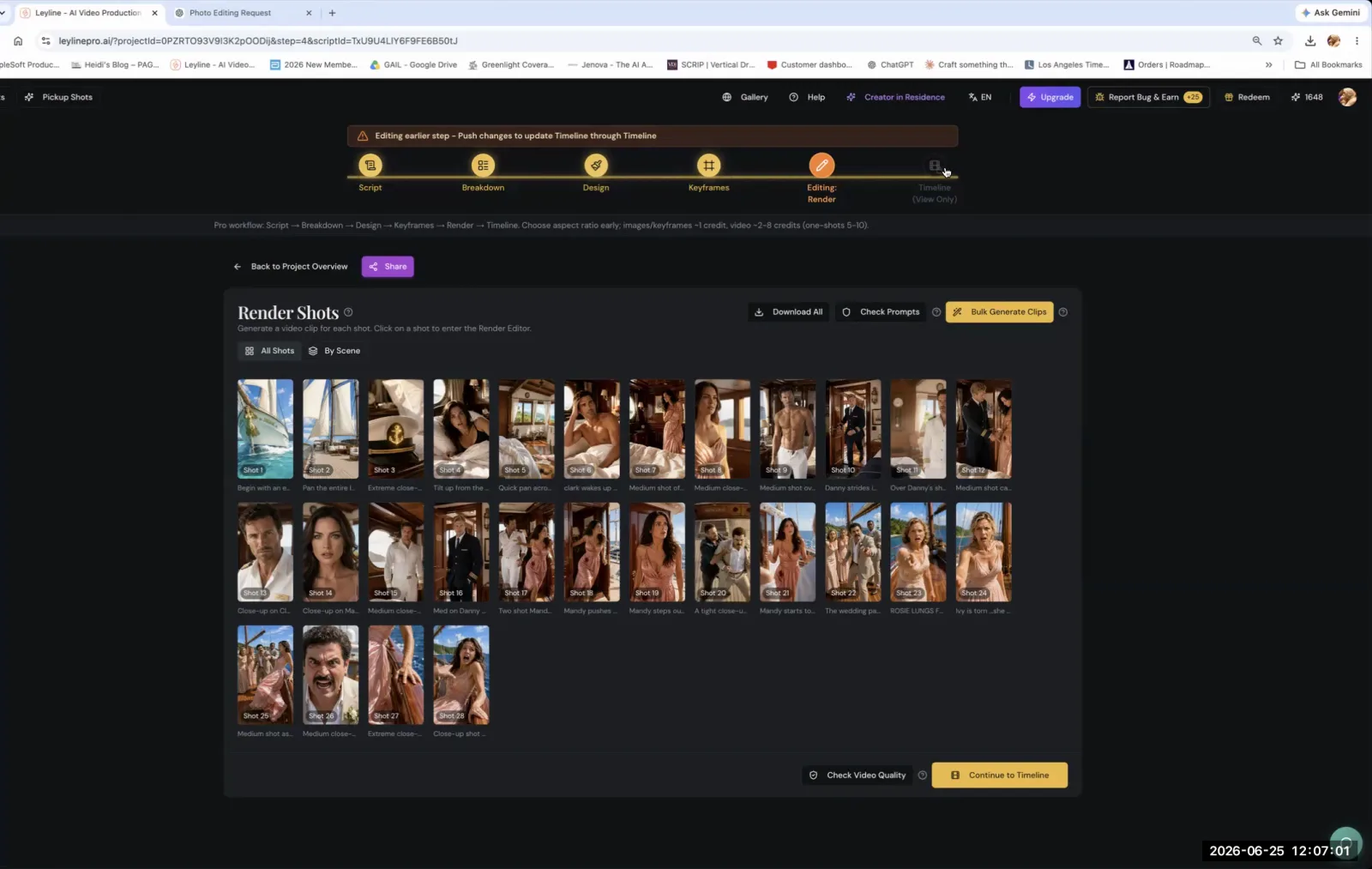
The core principle of AI filmmaking is using artificial intelligence to automate as much of the decision-making as possible during the asset creation process. This allows a filmmaker to bypass certain traditional production steps by generating visuals directly from text or image prompts. According to AI filmmaker Austin Zartman, creator of the AI short-film series ASHES, the goal of AI platforms is to "use AI to automate as much of the decision making as possible. So like in that shot breakdown, it's trying to make those decisions so that you don't necessarily have to do it."
This approach shifts the filmmaker's role from capturing footage with a camera to curating and directing the output of generative models. Instead of organizing a physical shoot, the filmmaker focuses on crafting precise prompts to create specific shots. The AI interprets these prompts to generate video clips, effectively acting as a digital cinematographer. This automation streamlines the initial production phase, but it also introduces its own set of challenges that require human oversight and intervention in later stages.
What is the development phase in AI filmmaking?
The development phase in AI filmmaking is the initial stage focused on creating the core visual assets, which includes generating all the necessary images and video clips using AI tools. This part of the workflow is often the most difficult and unpredictable. Austin Zartman notes that this stage "is often like the most frustrating and time consuming part of this whole process, like getting images that work or getting clips that work is the hardest part of the process."
During this phase, the filmmaker acts as a director for the AI. They write and refine text prompts, upload reference images, and repeatedly generate clips until they achieve a result that fits the narrative. This iterative process can require significant patience and experimentation. Success depends on understanding the nuances of the specific AI model being used and developing a prompting strategy that yields consistent and usable visuals. The quality and coherence of the assets produced in this phase directly impact the entire project.
How important is sound in AI-generated films?
Sound is just as important as the visuals in AI-generated films because it is the primary component for conveying emotion, atmosphere, and narrative depth. While AI can produce visually compelling scenes, these visuals alone are often emotionally sterile without a thoughtfully constructed soundscape. Zartman emphasizes this point, stating, "the sound is honestly... equally as important as the visuals... If you were to watch any of your episodes without any sound whatsoever... you will probably not feel much of anything."
Sound design transforms a collection of AI-generated clips into a cinematic experience. It guides the audience's emotional response, creates a sense of place, and provides crucial narrative cues that visuals alone cannot. Elements like a subtle musical score, environmental noises, or character voiceovers add layers of meaning and tension. Without this auditory dimension, even a visually continuous AI film can feel hollow and fail to connect with the viewer.
Why is sound a challenge for AI video models?
Sound is a major challenge because most current AI video generation models are optimized for visual output, with audio being a secondary and often poorly implemented feature. The sound generated natively by these models is frequently inconsistent or low quality, which can immediately signal to the audience that the content is AI-generated. Austin Zartman explains, "in most of the... AI generated content that I watched, the sound is often the first indicator that something was AI."
He points out that models like Kling are designed with a focus on visual generation. Zartman says, "all of these models are optimized for video... the sound is often a secondary element... what you're you're optimizing for when you do the prompting is for what you see in that clip and not necessarily what you hear." This means that even when a model generates audio, it lacks the consistency and control needed for professional filmmaking, making manual sound design an essential step.
How do AI filmmakers manage sound design?
AI filmmakers manage sound design by taking manual control during post-production and building the soundscape from scratch. Because AI models struggle with audio consistency, filmmakers treat the generated video as silent footage and add audio in an editing program. This process involves layering three distinct components to create a full and immersive auditory experience.
Austin Zartman breaks down these layers: "The three main components or the three layers of sound... are voiceover, so it's your characters speaking, sound effects... and then the third element would be music." By separating these elements, the filmmaker gains complete control. They can ensure character voices remain consistent across scenes, add specific environmental sounds to build the world, and use a musical score to direct the emotional tone. Zartman notes that achieving "consistent voices or consistent sound effects across clips is often very difficult" for AI, which is why this is a part of the process "that we can take control of and integrate into the editing stage."
How are AI-generated assets assembled into a film?
AI-generated assets are assembled into a cohesive film using a non-linear editing (NLE) program, the same kind of software used in traditional filmmaking. All the curated video clips, images, and the manually created audio layers are imported into the editor and arranged on a timeline. This timeline serves as the blueprint for the final film.
Describing the process, Zartman says, "when you open up an editing program, it looks something like this... This is your timeline... all it is is a collection of your clips, uh your videos, any sound effects that you've added, um, and you put them together on a timeline and just start uh building, you know, layer by layer an episode." This stage is where the raw, disconnected AI outputs are woven into a narrative through pacing, cutting, and sequencing. It is a critical, hands-on step that relies entirely on the filmmaker's storytelling and editing skills.
Can editing software add effects to AI video?
Yes, editing software is frequently used to add simple camera movements and other effects to otherwise static AI-generated video clips. This technique is a practical workaround that simplifies the AI generation process. Instead of trying to prompt a complex camera motion like a slow zoom, a filmmaker can generate a static shot and create the movement digitally in post-production.
This workflow is more efficient and provides greater control. As Austin Zartman points out, "One of the things that editing programs can do is that they can create the effect of simple camera movements. So instead of having a... shot where... the camera slowly zooms in on them, you could leave out that zoom in part, save that for the editor." By offloading this task to the editing software, filmmakers can focus the AI on generating high-quality, stable shots, and then add dynamic motion later to enhance the cinematic feel of the final product.
Frequently asked questions
What is AI filmmaking?
AI filmmaking is a production process that uses artificial intelligence to generate visual assets like video clips and images. These AI-generated materials are then assembled, edited, and paired with manually created sound design in traditional editing software to create a finished film.
Is AI filmmaking fully automated?
No, AI filmmaking is not fully automated. It requires significant human skill and intervention, especially in the post-production phase. Key tasks like curating the best AI-generated shots, editing them into a sequence, and designing the entire soundscape are performed manually by the filmmaker.
What is the hardest part of AI filmmaking?
According to AI filmmaker Austin Zartman, the most frustrating and time-consuming part of the process is the development phase. This involves generating usable and consistent images and video clips from AI models, which can require extensive prompting, iteration, and experimentation.
Why is sound handled manually in AI films?
Sound is handled manually because current AI video models are optimized for visuals, not audio. The sound they generate is often inconsistent and of poor quality. To create an immersive and emotionally resonant film, creators build the soundscape from scratch using voiceovers, sound effects, and music in an editing program.
Keep learning
This guide is part of the Editing and Sound Design masterclass lesson.
Related guides:
Comments
Sign in with your Leyline account to join the conversation.