A Guide to AI Filmmaking Development Pre Production
The ai filmmaking development pre production phase covers all foundational work completed before you generate any visual assets. This stage centers on writing and story development. Here, the narrative, characters, and world are planned in detail. AI filmmaker Austin Zartman, creator of the AI short-film series ASHES, states that this upfront planning is critical. By figuring out a story in detail before generation, creators save significant time and energy. This preparation helps avoid costly revisions and technical problems. The process is strategic planning that accounts for the specific abilities and limits of current AI tools.
What is the core of a story in pre-production?
The core of a story is a character who wants something badly but has difficulty getting it. AI filmmaker Austin Zartman advises writing this out as a single sentence for every project. This sentence should be included in your series bible. This simple definition provides the essential elements for a compelling narrative:
- A protagonist (the character)
- A goal (what they want badly)
- A conflict (the difficulty in getting it)
Boiling your story down to this fundamental structure during pre-production creates a clear and focused foundation. This exercise ensures your narrative has a strong engine before you invest time writing full scripts or generating scenes.
How should you structure your IP for long-term success?
To ensure long-term success, build your intellectual property around an underlying conflict that can continuously generate new stories. This strategy prevents your IP from depending on a single character, story, or conflict. The goal is to create a wider world with foundational tensions that can spawn many narratives.
As Austin Zartman advises, avoid building your entire project on one specific plotline. Instead, establish a core conflict that allows for new episodes or installments without exhausting the premise. This approach makes the IP more robust and sustainable, which is ideal for a series format.
How do you adapt writing for AI and vertical video?
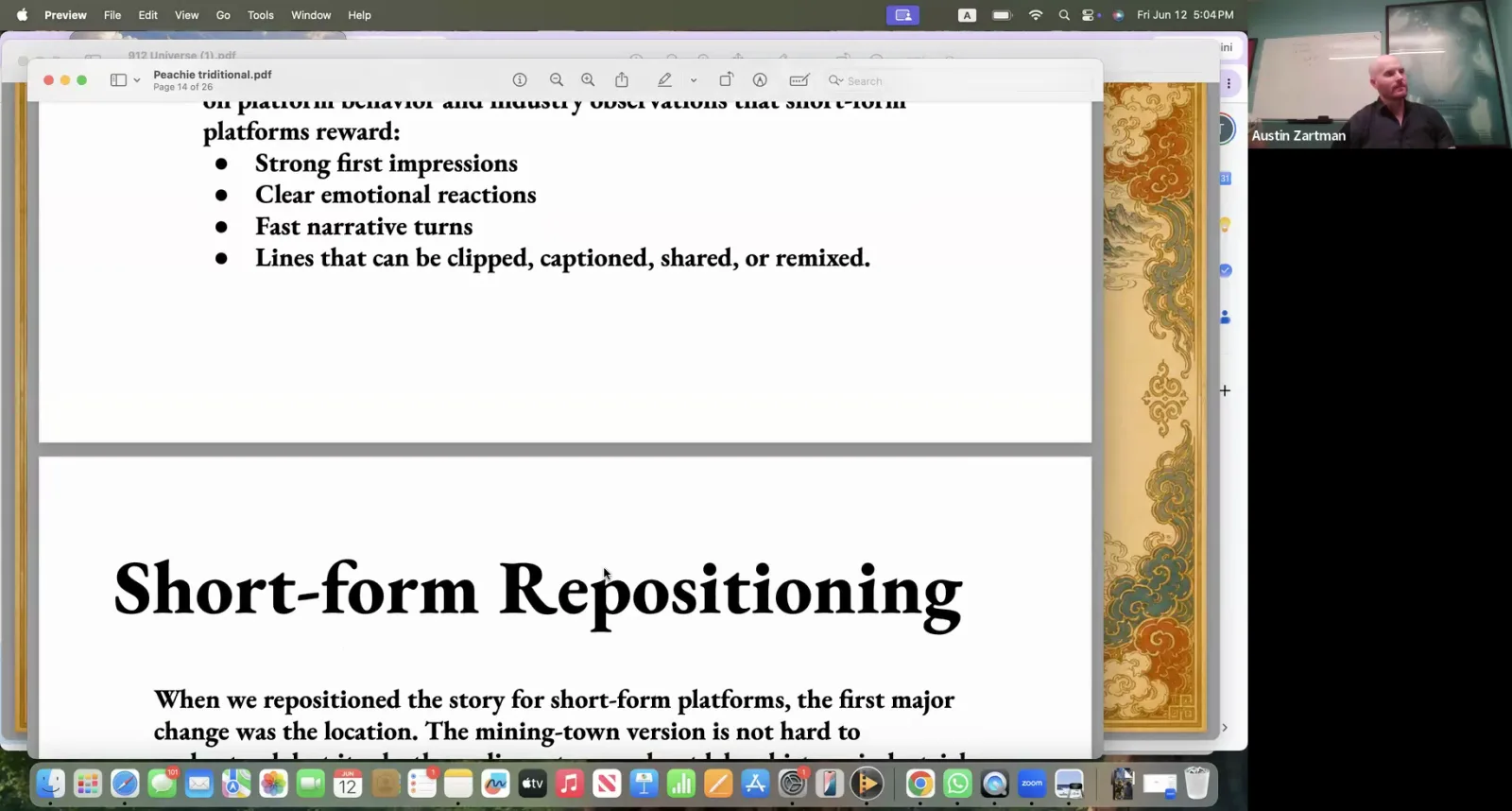
Adapting writing for AI and vertical video often requires repositioning the story for a specific audience. For example, Generation Z consumes content on short-form platforms and requires a faster hook, a clearer character attitude, and an immediate emotional response.
Austin Zartman shared a direct example of reworking a traditional script for this demographic. The original writing failed to find a clear audience on short-form platforms. This made it financially unviable beyond a first episode. The story was successfully repositioned by focusing on these key elements. This ensured it could capture and hold attention in a fast-paced vertical feed. This strategic shift during the pre-production phase is a business decision as much as a creative one.
Strategic Decisions in AI Filmmaking Development Pre Production
During the ai filmmaking development pre production process, you must make key strategic decisions about your script's contents. These choices are critical for working within the limitations of current AI models. Careful planning can prevent major issues during generation.
Key areas to consider include:
- Number of Characters: Having multiple characters in a single shot can cause generation models to break. This is especially true if they perform different actions at the same time. Austin Zartman notes that even a simple two-shot is challenging if the characters have separate instructions. The model can confuse which action belongs to which character.
- Locations: Plan for a limited number of locations. Just like characters, locations need to remain consistent, which requires clear visual references in your series bible to avoid confusing the AI.
- Objects: Complex interactions with objects can also be difficult for AI to render accurately. A script that calls for intricate manipulation of props may lead to poor results.
- Complexity of Actions: Complicated actions like fight scenes are very difficult for current models to render effectively. Rapid, overlapping movements are hard for AI to track and generate coherently. Planning for simpler, distinct actions in your series bible will prevent frustration during production. While some tools like CDance handle multiple instructions better, this is a general limitation to consider.
How can you maintain visual consistency in AI filmmaking?
You can maintain visual consistency by creating detailed pre-production assets. Specifically, you need reference images and comprehensive character sheets within your series bible. Managing consistency is one of the biggest challenges in AI filmmaking, but thorough preparation helps.
Austin Zartman emphasizes using character sheets that show characters from multiple angles. These sheets should include:
- A headshot
- A full body shot
- A left angle view
- A right angle view
These reference materials act as a consistent visual target for the AI models. They guide the AI to generate the same character accurately across different scenes and shots. This upfront work is essential for achieving a coherent look and feel for your film.
What is a practical pre-production workflow?
A practical pre-production workflow ensures your project's foundation is solid before you move to generation. The process involves three main steps, as taught in Austin Zartman's masterclass:
- Finalize your series bible. The bible is the most important document. It contains all the core information about your world, characters, and story. Get this document completely finished first.
- Rewrite your first episode completely. With the bible complete, you can confidently write the full script for your first episode. The bible will guide your writing and ensure it aligns with the larger project vision.
- Create bullet-point outlines for episodes two and three. You do not need to write these episodes in full detail yet. Creating outlines allows you to map out the subsequent story arcs and ensures the narrative is heading in the right direction.
Frequently asked questions
What is development and pre-production in AI filmmaking?
In AI filmmaking, the ai filmmaking development pre production phase includes everything that happens before generating visual assets. According to AI filmmaker Austin Zartman, this phase focuses specifically on the writing and story development process, including the creation of a series bible.
Why is upfront story planning so important?
The more you can figure out your story before you start generating assets, the more time and energy you will save. Thorough pre-production, including a series bible and episode outlines, helps prevent costly and time-consuming changes during the AI generation phase.
What's a simple definition of a story for a series bible?
A simple, effective definition of a story is: somebody wants something badly but is having difficulty getting it. This a single sentence contains the three core elements of any narrative: a protagonist, their goal, and the obstacles they must overcome.
How should I upload my series bible to a platform like Leyline?
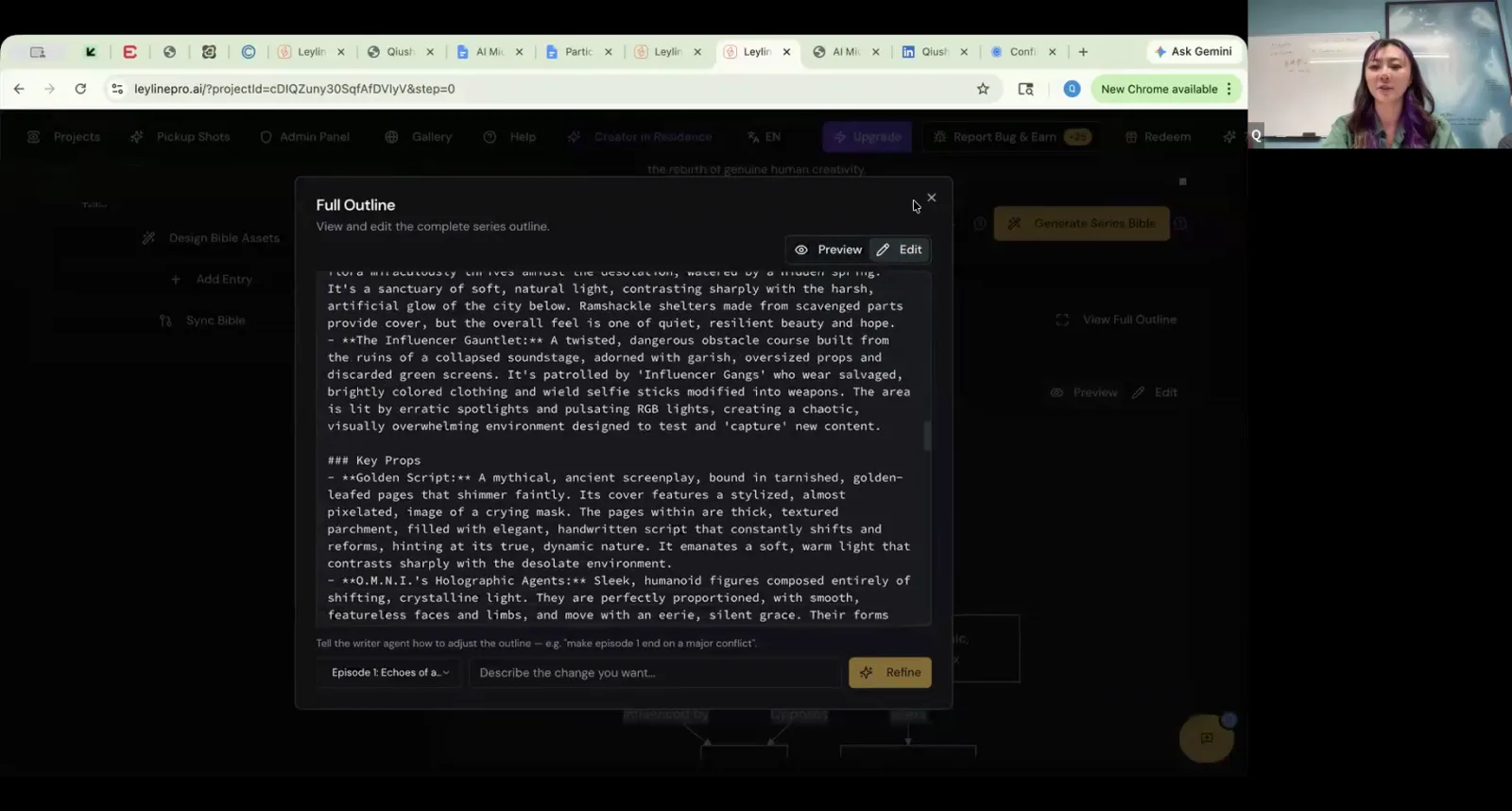
When using a platform like Leyline, select the correct template, such as the 'vertical shorts template'. For best results when uploading your own series bible, use a PDF document that does not contain images. Large PDFs with images can cause long upload times or reading errors.
What is a key limitation of AI models to consider in writing?
A key limitation is the difficulty AI models have rendering multiple characters in a single shot, especially if they perform different actions. Scripts written during pre-production should account for this by limiting the number of characters and complex, simultaneous actions in a scene to avoid model failure.
Keep learning
This guide is part of the Development and Pre-Production for AI Micro-Dramas masterclass lesson.
Related guides:
Comments
Sign in with your Leyline account to join the conversation.